Book Details
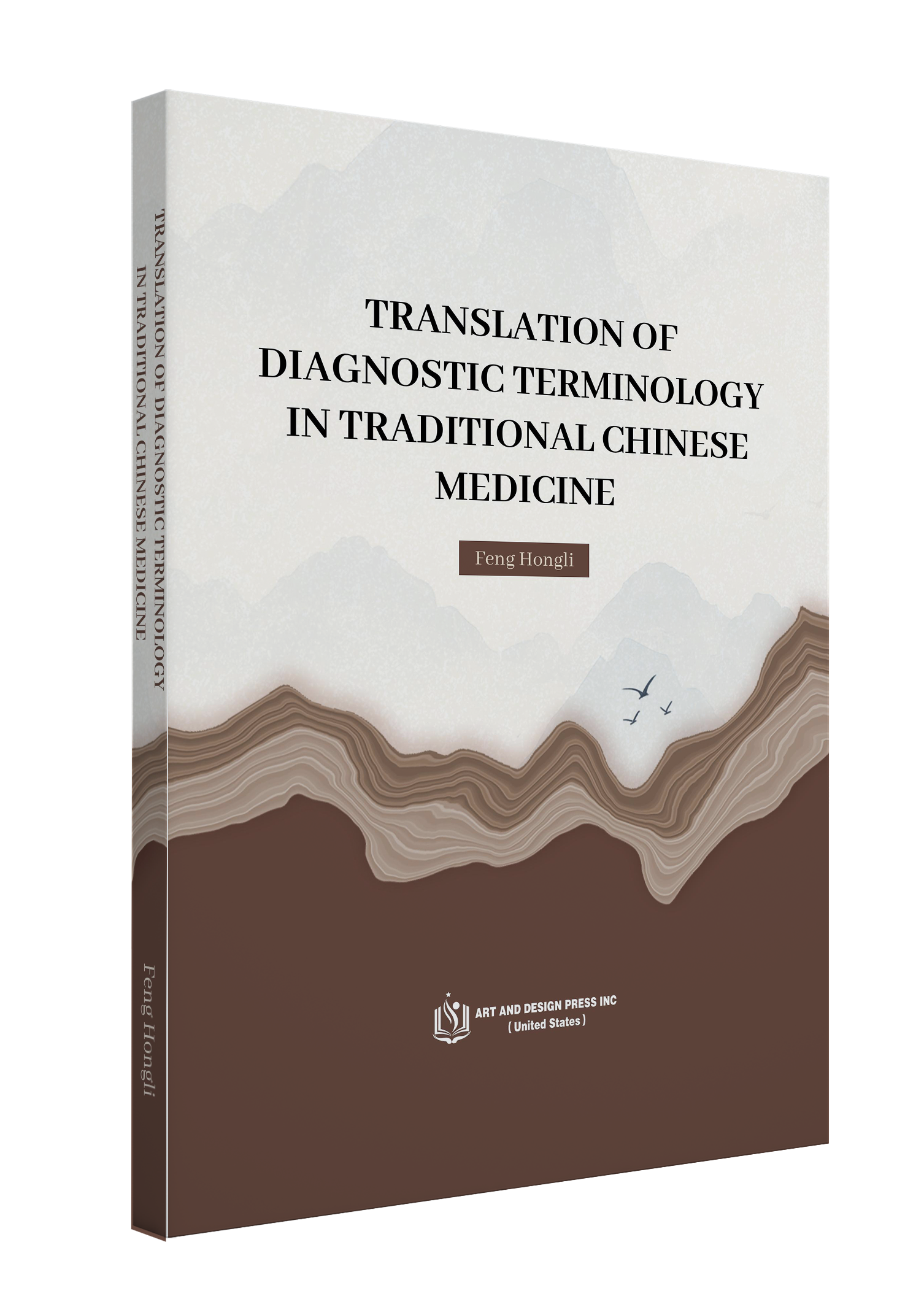
Total Page:368
Translation of Diagnostic Terminology in Traditional Chinese Medicine
Publisher: ART AND DESIGN PRESS INC.
Published Date: 30 Jun 2026
ISBN:
979-8-9963459-0-8
Description
ABOUT THE AUTHOR
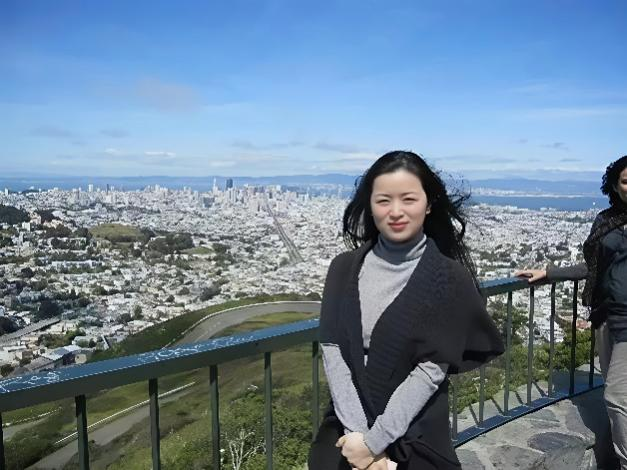
Dr. Feng Hongli is a distinguished scholar and full-time faculty member at the School of Foreign Languages, Ningxia Medical University, China, specializing in English language education, cross-cultural translation, and AI-enhanced pedagogy. She earned her bachelor’s and master’s degrees from Marylhurst University, USA, and her doctoral degree from Universiti Teknologi MARA, Malaysia. Dr. Feng spent six years studying in the United States and, in 2020, conducted advanced research as a visiting scholar at the University of Liverpool, UK, cultivating a robust international academic foundation and extensive cross-cultural perspectives.
With over a decade of experience in higher education, Dr. Feng has developed an innovative and theoretically grounded teaching framework, particularly in English reading and translation. Her work offers original insights into reading strategy optimization, cognitive process design, and the integration of technology into pedagogy. Her excellence in teaching has been widely recognized: she has been repeatedly honored as “Most Beloved Young Teacher” and received accolades including “Outstanding Staff,” “Advanced Worker,” and “Model Online Teaching Instructor during COVID-19.”
Committed to national strategy and regional development, Dr. Feng has served as a professional translator for multiple China–Arab States Expos, earning the regional “Advanced Individual” distinction and demonstrating exceptional language proficiency and intercultural communication skills. In talent cultivation, she emphasizes research-driven learning and competition-based mentoring, guiding students to win numerous national and provincial awards in the National College English Contest and FLTRP·CUP, reflecting her pedagogical leadership and mentorship impact.
Her research spans English education, translation studies, and AI-enhanced language instruction. She has led and contributed to multiple institutional and provincial research projects, authored over twenty journal articles—several indexed by Scopus and SCIE—and published influential works, including Research on English Education and Classroom Teaching and College English Writing. Her scholarship addresses blended learning innovations, AI applications in language pedagogy, standardization of TCM terminology translation, and classroom interaction mechanisms, with significant international impact.
Dr. Feng integrates translation theory with cutting-edge educational technologies to construct an English education and translation paradigm that combines global vision with Chinese characteristics. Her work is characterized by theoretical depth, methodological rigor, and practical relevance, positioning her as a leading contributor to contemporary language education and translation scholarship.
Catalogus
1.2.1 Diagnostic and Treatment Errors and Confusion
1.2.2 Barriers to International Communication and Academic Collaboration
1.2.3 Hindrance to the Modernisation and Standardisation of TCM
2.2.1 Early TCM Terminology English Translation Period (17th century - late 1970s)
2.2.2 Standardized Research Period of TCM Terminology Translation: (Early 1980s - to Present)
2.3 Research on English Translation of TCM Diagnostic Terminology
2.4 Overview of Three Selected Signature Publications for the English Translation of TCM Terminology
2.4.2 The International Standard Chinese-English Basic Nomenclature of
Chinese Medicine (ISN)
2.4.3 The Study of International Standard Chinese-English Basic Nomenclature
of Chinese Medicine
2.4.4 The Distribution of TCM Terms in Three Publications
2.6 Related Theory on English Translation of TCM Terminologies
2.6.1 Translation Theory from a Linguistic Perspective
2.6.2 Translation Theory from a Cultural Perspective
2.6.3 Translation Theory from a Communicative Perspective
2.7 Theoretical Framework of the Study
2.7.1 Learning Awareness of “Adaptation” and “Selection” in the Translation Community
2.7.2 Different Perspectives of Hu Gengshen’s Translation Approach on “Adaptation” and “Selection”
2.7.4 Basic Framework of Hu Gengshen’s Translation Approach
2.8 Comparative Analysis of Hu Gengshen’s Theory and Other Theories
CHAPTER 3 RESEARCH METHODOLOGY
3.3 Population and Research Sampling
3.3.1 Three Internationally Authoritative Publication Textual Materials
3.4.1 Three International Publications (instructional materials)
3.5 Validity & Reliability of Instrument
3.5.2 Reliability of Instrument
3.6.1 Phrase 1: The Selection of Three International Publications
3.6.2 Phrase 2: Analyse the Selected Terms based on Hu Gengshen’s
Translation Approach
3.6.3 Phrase 3: Delphi Method to Standardise 148 Selected Terms
3.7.1 Quantitative Data Analysis
3.7.2 Qualitative Data Analysis
4.2 The Same and Different Translations of TCM Diagnostic Terminology in IST,
ISN, and ISBT
4.3.3 Expert Validation of Translated Terminology Following RQ2 Analysis
5.2 Interpretation and Synthesis of Findings
5.4 Recommendation of Future Studies
5.4.1 Broaden the Terminological and Disciplinary Scope
5.4.2 Conduct Cross-Linguistic and Cross-Cultural Validation
5.4.3 Enhancing the Framework through Ongoing Expert Feedback
5.4.4 Promote Technological Integration
5.5.1 Theoretical Contributions
5.5.2 Methodological Contributions
5.5.4 Educational and Pedagogical Contributions
5.5.5 Contributions to Policy and Standardisation
5.6.1 Theoretical Implications
5.6.2 Methodological Implications
5.6.3 Pedagogical and Educational Implications
5.6.4 Practical and Clinical Implications
Art and Technology
We are committed to support the scientific community by publishing impactful research and enhancing communication among scientists. At Art and Technology, we are continuously looking for ways to accelerate scientific progress and to strive for transparency and open communication, making knowledge freely accessible without barrier.
Contact us: editorial@arttechpress.com
263 S KENWOOD ST 560 CASPER,WY 82601